
Welcome to the
Marine Big Five Ultimate Wiki
Your comprehensive source for understanding, experiencing, and protecting the iconic marine wildlife of the Western Cape.
A Comprehensive Overview
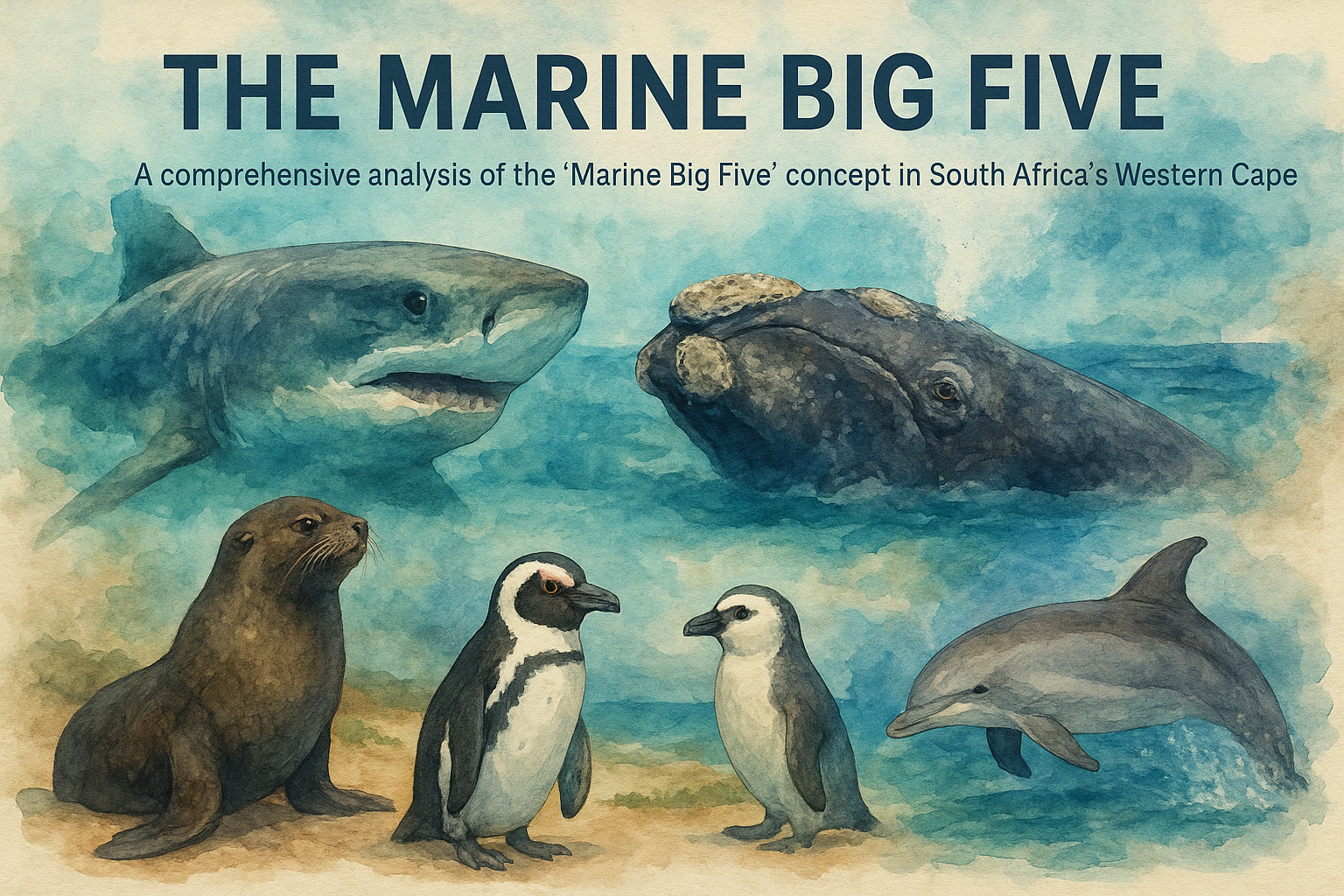
This wiki offers a **comprehensive analysis** of the **"Marine Big Five" concept** in South Africa's Western Cape, a tourism marketing term encompassing the **Great White Shark, Southern Right Whale, Cape Fur Seal, African Penguin, and Common Dolphin**. We **examine the legal and commercial landscape** surrounding this terminology, noting its widespread, seemingly unrestricted use by various tourism and conservation entities. Additionally, we provide **detailed profiles for each species**, outlining their presence, behaviors, conservation statuses, and significant threats within the Western Cape's unique marine environment, highlighting both **successful conservation efforts** and **emerging challenges** like disease outbreaks and shifts in predation dynamics. The information collectively serves to **inform brand development** by emphasizing authenticity, responsible tourism, and a dynamic conservation narrative.
Okay team, let's synthesize everything we've gathered to build the ultimate interactive wiki for the Marine Big Five! This will be a comprehensive resource, prioritizing understanding and actionable insights.Join Us on this great adventure!
Engage with Our Live Notebook Assistant!
Have a question about the Marine Big Five that Stella can't quite answer, or want to dive deeper into our research? Click the button below to open our live Notebook Assistant in a new tab!
Open Notebook AssistantUnderstanding the Marine Big Five Concept
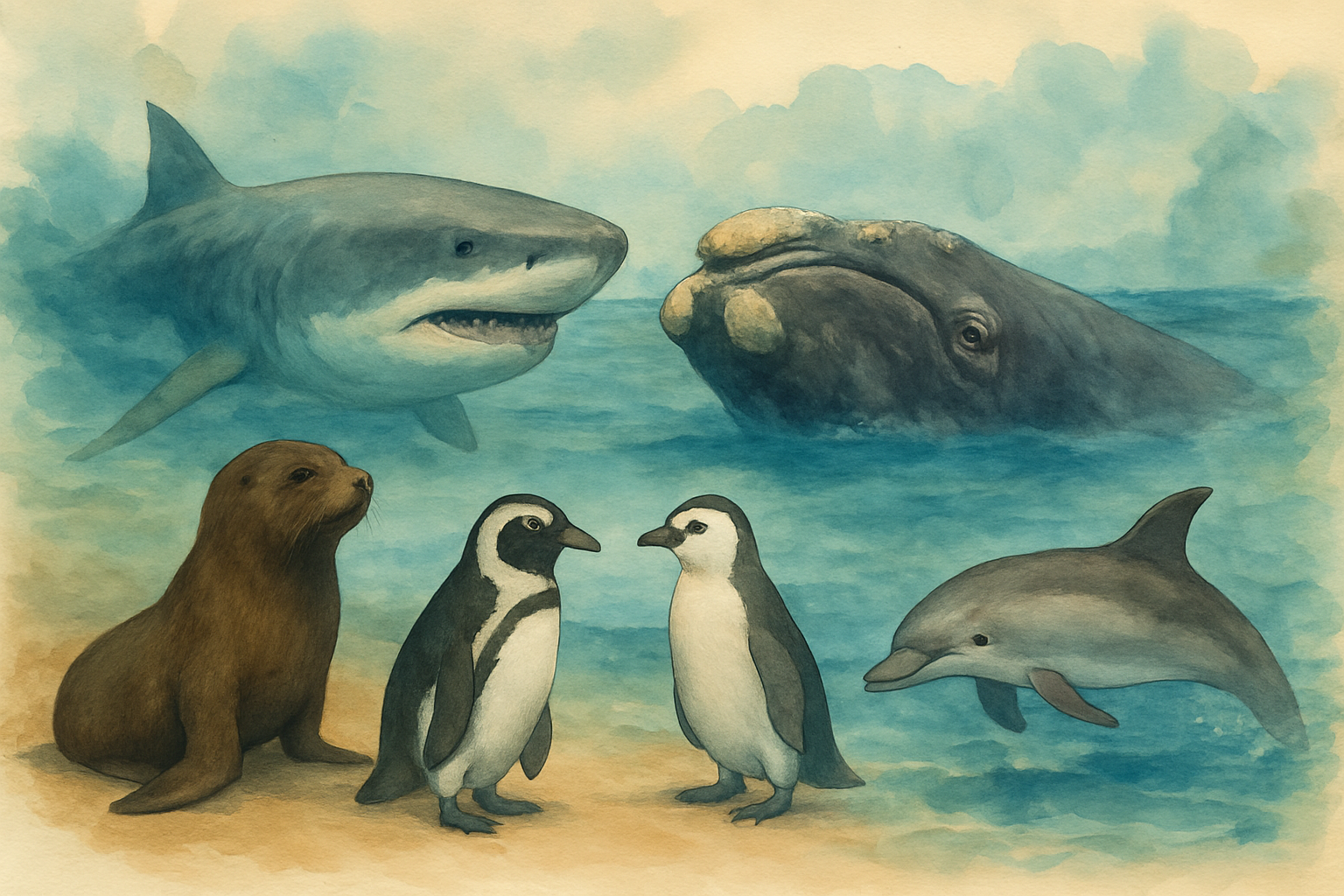
The "Marine Big Five" is a compelling concept, drawing a direct parallel to Africa's terrestrial "Big Five". This term originated in South Africa, specifically in Gansbaai, which is often called "The Serengeti of the Seas" due to its rich ocean life. It consistently refers to five iconic marine animals: Great White Shark, Southern Right Whale, Cape Fur Seal, African Penguin, and Common Dolphin.
Origin of the Term
The term was coined in Gansbaai, South Africa, to highlight its abundant marine biodiversity. It expanded from initially focusing on Great White Sharks and Southern Right Whales ("home of the big 2") to encompass five key species. This strategic marketing approach underscored the region's diverse marine appeal.
Ecological Basis
The Western Cape's profound ecological significance stems from the convergence of the cold Benguela Current (Atlantic) and warm Agulhas Current (Indian Ocean). This creates an exceptionally biodiverse marine environment, recognized as one of the richest in the world. This natural phenomenon underpins the authenticity and marketability of the "Marine Big Five" brand.
Commercial Usage & Legality of 'Marine Big Five'
This section addresses the legalities and commercial uses of the term "Marine Big Five," analyzing its standing as a brandable asset and mapping out who is currently using it in the marketplace.
Legality & Copyright Status
Our research indicates that "Marine Big Five" is a widely adopted descriptive term used by numerous tourism operators, conservation organizations, and educational institutions throughout the Western Cape. This widespread, unhindered commercial use suggests it is unlikely to be a tightly controlled trademark.
- No Formal Trademark: There is no explicit information indicating that "Marine Big Five" is a registered trademark or subject to exclusive copyright by a single entity in South Africa.
- Common Usage: The term originated as a coined phrase for marketing by Gansbaai, and its subsequent widespread adoption by numerous stakeholders further supports the conclusion that it functions as a common descriptor.
- Recommendation: For absolute legal certainty, however, a formal, up-to-date trademark search on the South African CIPC IPOnline portal is always recommended.
Disclaimer: Not Legal Advice
This information is for research and strategic purposes only and does not constitute formal legal advice. For definitive legal standing, we strongly recommend commissioning a professional trademark search through a qualified intellectual property attorney.
Commercial Usage Landscape
The term is actively used across different sectors. Use the filters below to explore real-world examples of how it's being leveraged.
Comprehensive Profiles of the Marine Big Five Species
Dive deep into the lives of each iconic species. Each profile provides detailed information on their habitat, behaviors, conservation status, threats, and the vital conservation efforts underway in the Western Cape.
The Broader Conservation Landscape: Why it Matters
Conservation is at the heart of marine ecotourism. This section highlights the critical efforts and challenges in protecting the Western Cape's marine biodiversity, emphasizing the interconnectedness of these vital ecosystems.
Marine Protected Areas (MPAs)
South Africa's oceans are teeming with biodiversity, protected by a network of 42 MPAs. In 2019, 20 new or expanded MPAs were declared under the Operation Phakisa initiative, increasing protected marine areas from under 0.5% to 5.4% of the Exclusive Economic Zone (EEZ). These areas are crucial for biodiversity preservation, fisheries sustainability, and ecotourism.
Ecosystem Interconnectedness
The decline of even apex predators like Great White Sharks due to orcas demonstrates a trophic cascade and highlights the delicate balance of the entire marine food web. This emphasizes that the health of even the top predator is precarious and directly influences the stability of the entire marine food web.
Ongoing Challenges & Call to Action
Despite conservation successes (like Southern Right Whale recovery), species like the African Penguin face urgent crises due to overfishing, and seals face emerging diseases like rabies. Pollution also remains a significant threat to marine life. Tourists are often willing to contribute to conservation. Operators should emphasize opportunities for participation, such as "adopt-a-shark" or "adopt-a-whale" campaigns, or in-kind contributions.
Experiencing the Marine Big Five: Viewing Opportunities
The Western Cape offers diverse and thrilling ways to encounter these magnificent animals. Discover the best tours, locations, and seasons for unforgettable marine wildlife experiences.
Prime Viewing Locations & Activities
-
Gansbaai
World-renowned for Great White Shark cage diving ("Shark Alley"). Also excellent for viewing whales, seals, and penguins around Dyer Island. Prominent operators: Marine Dynamics, Dyer Island Cruises.
-
Hermanus (Walker Bay)
Acclaimed as the best land-based whale watching destination in the world. Southern Right Whales come here to breed and calve. Operators: Southern Right Charters.
-
Simon's Town & False Bay
Home to the famous Boulders Beach African Penguin colony (kayak trips or observation points). The bay is rich with life, offering sightings of dolphins, seals (Seal Island), and whales. Operators: Simon's Town Boat Company.
-
Plettenberg Bay & Mossel Bay
Key viewing sites along the Garden Route for whales, dolphins, and seals. Mossel Bay is also a shark cage diving location.
-
Cape Town Waterfront
Observe playful Cape Fur Seals napping on docks. Two Oceans Aquarium offers further marine education.
Seasonal Viewing Calendar
Responsible Marine Tourism: Ethical Engagement Guidelines
Promoting ethical engagement is key for the sustainability of these experiences. Choose operators who prioritize animal welfare and adhere to strict codes of conduct.
-
Prioritize Animal Welfare:
A good operator always puts the well-being of the marine animals first through careful and responsible boat handling.
-
Adhere to Codes of Conduct:
This includes maintaining legal distances from marine life. Recreational vessels are not permitted to intentionally approach cetaceans closer than 300m. Permitted whale watching vessels can approach from 50m, but whales may approach closer due to curiosity.
-
No Feeding or Touching:
Strict rules prohibit touching or feeding wild animals, as this can alter their natural behaviors and create dependence. It is illegal to swim with wild dolphins in South Africa.
-
Educated Guides:
Ethical tours feature onboard marine biologists or trained naturalist-guides who provide factual, informative commentary on species' biology, threats, conservation status, and ethical viewing practices.
-
Transparent Advertising:
Operators should provide realistic "sightings success rates" rather than guaranteeing sightings, as marine wildlife is not available on demand.
-
Support Conservation:
Choose operators that actively contribute to marine conservation through research, education, and direct efforts. Look for certifications like Fair Trade Tourism or Blue Flag status.
-
Community Involvement:
Best practice businesses build social license by being respected and supported by local communities, often by providing employment and engaging in community development.
Key Organizations and Partners
Discover the prominent organizations actively involved in the conservation, research, and responsible tourism of the Marine Big Five in the Western Cape.
Get Involved: Make a Difference!
Want to be a shining star for marine conservation? There are many ways you can contribute to protecting the incredible Marine Big Five!
Volunteer & Internship Portal
Passionate about marine life? Many organizations offer hands-on opportunities to assist with research, data tracking, and animal rehabilitation. It's a fantastic way to learn and contribute directly!
- African Impact: Offers marine conservation volunteer projects.
- Marine Dynamics Academy: Provides marine wildlife training, internships, and volunteering.
Donation & Support Page
Every contribution, big or small, helps fund vital research, rescue operations, and habitat protection. Your support keeps the ocean's show going!
- Support SANCCOB's critical work with African Penguins.
- Contribute to Dyer Island Conservation Trust's research and ecosystem protection.
- Participate in "adopt-a-shark" or "adopt-a-whale" campaigns.
Citizen Science Initiatives
You don't need to be a scientist to contribute! Citizen science programs allow you to participate in data collection, helping researchers understand and protect marine life. Keep an eye out for local initiatives where you can get involved.
Explore Citizen ScienceBeyond the Big Five: A World of Marine Wonders
While the Marine Big Five are spectacular stars, the Western Cape's ocean is a vast stage teeming with countless other fascinating creatures and vital ecosystems.
The convergence of the cold Benguela and warm Agulhas currents creates a unique environment supporting an incredible diversity of marine life beyond our five famous friends. From vibrant coral reefs to mysterious deep-sea canyons, and from tiny plankton to majestic seabirds, every creature plays a vital role in this interconnected underwater world.
Meet WHATS_wendythewhale™: Our Festival Greeter!
Say hello to Wendy the Whale, our beloved mascot and a true star! She's here to greet you and guide you through the wonders of the ocean.
Meet the WHATS_tidal10™ Crew!
Dive into the vibrant world of the Tidal Ten! These incredible characters from the tidepool stage are here to teach us about balance, expression, and teamwork.
Meet the WHATS_supermarine5™ Team!
Get ready for adventure with the Super Marine 5! This heroic team embodies leadership, stealth, communication, strategy, and wisdom in the ocean.